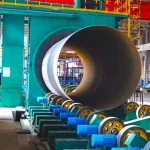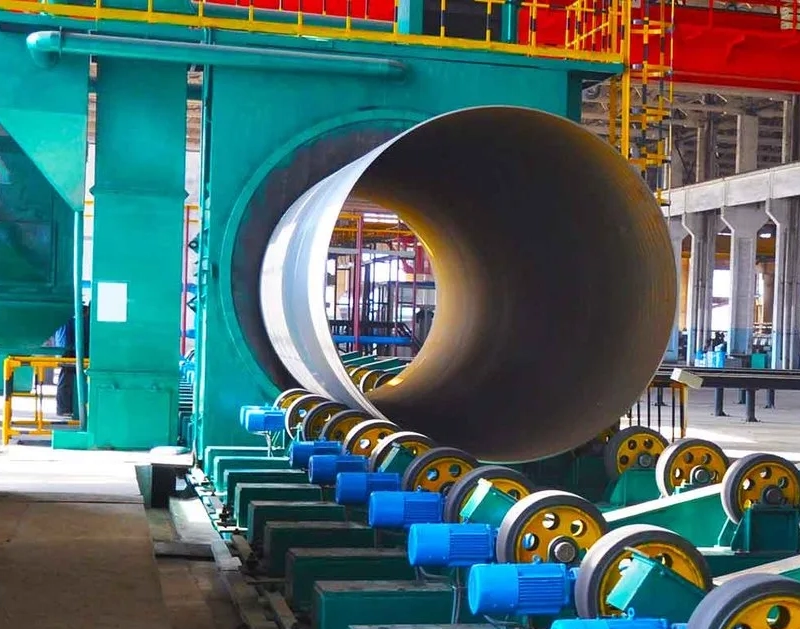
A Línea de producción de tubos JCO forms large-diameter steel pipes by crimping a plate into a J-shape, then a C-shape, then an O-shape before longitudinal seam welding — and it remains the standard route for high-volume line pipe because the JCO forming sequence delivers consistent ovality and weld quality at lower tooling cost than UOE presses.
What processes make up a JCO pipe production line?
A JCO pipe production line runs edge milling, JCO forming, seam welding and sizing in one continuous flow. The JCO/JCOE/LSAW process begins with edge milling machines that prepare plate edges to the exact bevel geometry the weld needs, because an unmilled edge is the most common source of seam defects. The plate then passes through the crimping press and forming press, where it is bent progressively into J, C and O profiles. Longitudinal seam welding follows — submerged arc welding in the LSAW configuration — then sizing, straightening and hydrostatic testing. JIUYING builds JCO pipe lines that include edge milling machines as standard, not as an option, because edge preparation determines weld integrity more than any downstream station.
What plate thickness and diameter ranges should buyers specify?
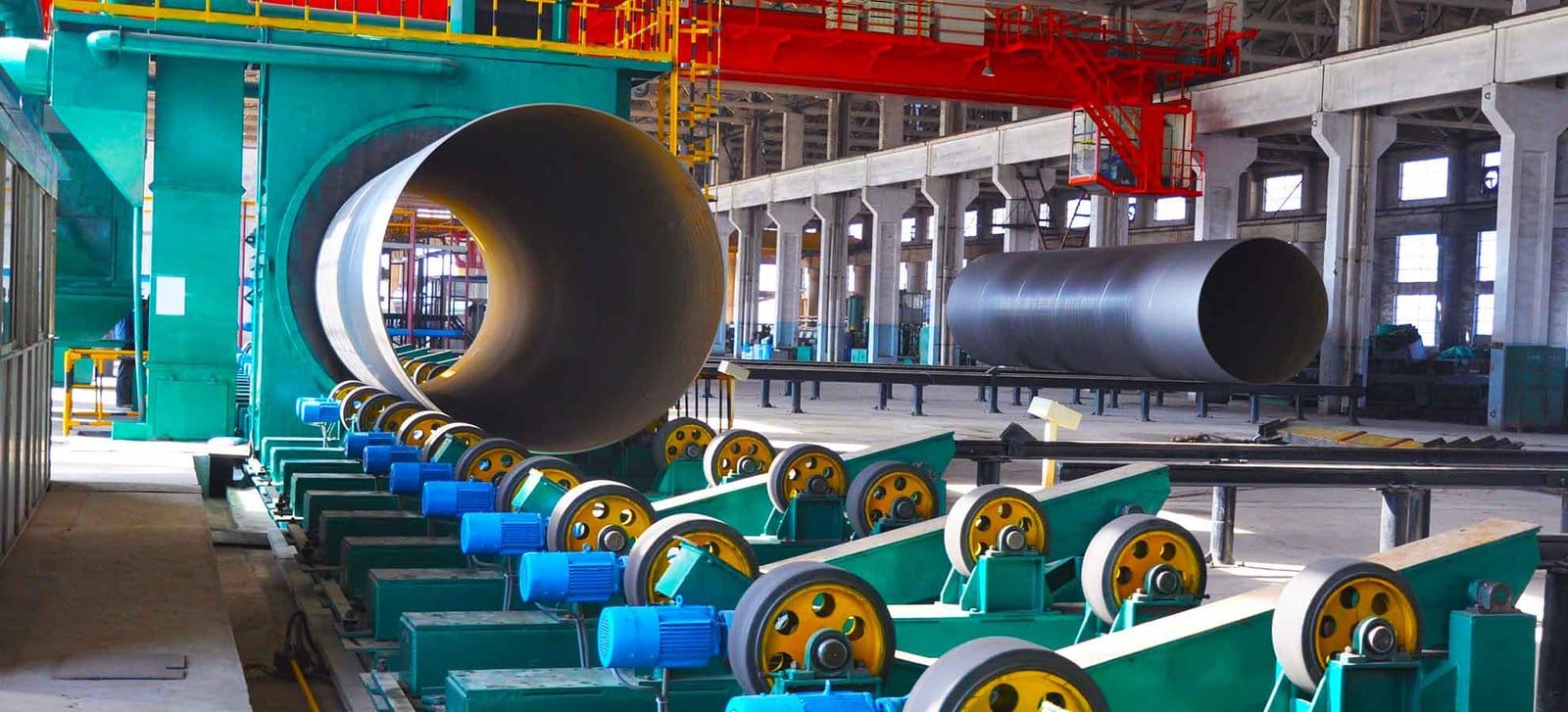
Buyers should specify the maximum wall thickness and outer diameter first, because these two figures set press tonnage, forming force and the entire machine footprint. A JCO pipe production line is typically chosen for large-diameter, thick-wall pipe where the plate cannot be formed in a single pass. When specifying, state: maximum plate thickness, maximum and minimum outer diameter, pipe length, steel grade and yield strength, and required production rate in pipes per shift. Yield strength matters more than many buyers expect — a line sized for mild steel will deflect or stall on high-strength grades at the same thickness. J&Y matches equipment configuration to each customer’s stated production requirements rather than selling a fixed catalogue model.
How does JCO compare with other large-diameter pipe forming methods?
JCO forming wins on tooling flexibility and changeover cost, while UOE wins on cycle time at very high volumes. A JCO pipe production line uses a single set of forming tools across a wide diameter range, so switching pipe sizes requires adjustment rather than a new tooling set. UOE lines need dedicated dies per diameter, which is economical only when a mill runs one or two sizes continuously. For buyers running mixed diameter schedules, JCO is the more practical choice. The trade-off is slightly lower throughput per hour, which is usually irrelevant outside very large pipeline contracts.
What quality checkpoints should a buyer require?
A buyer should require four documented checkpoints: edge bevel geometry after milling, forming ovality before welding, weld seam inspection after LSAW, and dimensional verification after sizing. Edge bevel geometry controls weld penetration. Forming ovality controls whether the seam closes evenly. Weld inspection — visual, ultrasonic or radiographic depending on the specification — confirms internal soundness. Final dimensional checks confirm diameter tolerance and straightness. Ask the supplier for the inspection routine at each station, not just a final certificate. Dalian Jiuying Heavy Machinery Equipment Co., Ltd. applies strict control from design through delivery, so the inspection sequence is defined at the design stage.
Conclusión
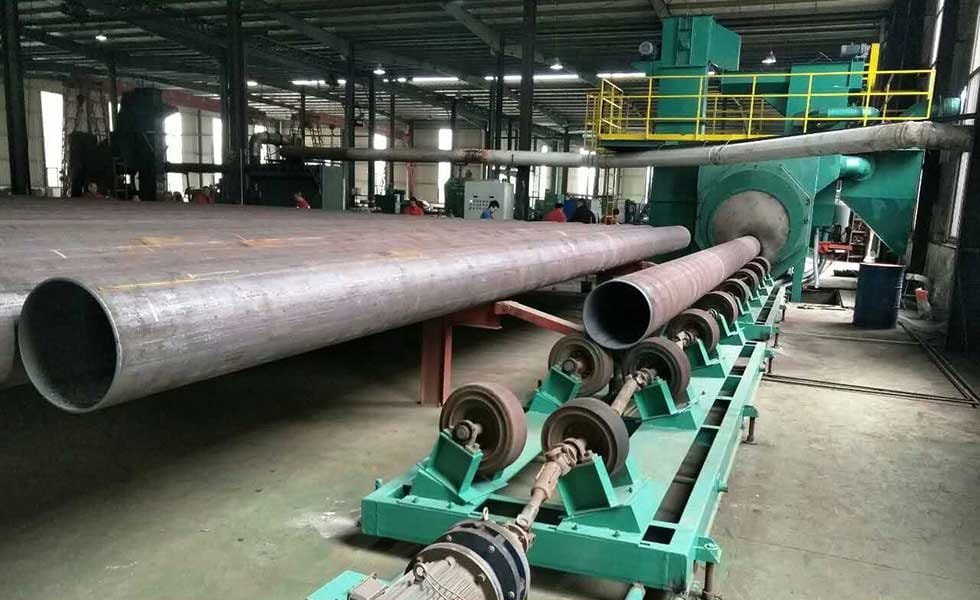
Specify maximum thickness, diameter range and steel yield strength before discussing price, then require documented inspection at edge milling, forming, welding and sizing. Buyers who define those four parameters first avoid the most expensive mistake in JCO pipe line procurement — a line that is technically sound but sized for the wrong plate. Review the JCO pipe line range at https://www.toproductline.com/ and confirm the configuration against your own production schedule.
Frequently Asked Questions
What is a JCO pipe production line used for?
A JCO pipe production line is used to manufacture large-diameter longitudinal seam welded steel pipes from flat plate. The line crimps and forms the plate into J, C and O profiles, then welds the longitudinal seam. JCO pipe production lines serve oil and gas transmission, water pipelines, structural piling and pressure pipe applications where thick-wall, large-diameter pipe is required.
What is the difference between JCO and JCOE pipe forming?
JCOE adds an expansion step after JCO forming and welding. A JCO pipe production line forms and welds the pipe; a JCOE line then mechanically expands the welded pipe to improve dimensional accuracy and relieve residual stress. JCOE pipe production lines deliver tighter diameter tolerance and better roundness, which matters for pipeline girth welding in the field.
How thick can plate be on a JCO pipe production line?
Plate thickness on a JCO pipe production line depends on press tonnage and the steel grade being formed. Buyers must state maximum wall thickness and yield strength together, because high-strength plate requires greater forming force at the same thickness. Dalian Jiuying Heavy Machinery Equipment Co., Ltd. configures JCO pipe lines to each customer’s stated thickness and diameter range.
Which welding process is used on a JCO pipe line?
Submerged arc welding is the standard process on a JCO pipe production line, applied as LSAW for the longitudinal seam. Submerged arc welding deposits high-quality weld metal at the thicknesses JCO pipe lines handle. The JCO pipe production line combines this with edge milling before forming, so the weld bevel is prepared to the geometry the welding station requires.